02 / Heels guide
How to Practise Walking in Heels at Home
The best way to learn how to walk in heels is at home, before it matters. Ten minutes a day for a week is enough to go from wobbly to steady.
 Save this guide to Pinterest
The 7-day plan
- 01
Day 1: Just stand
Put your heels on and stand in them for five minutes while you do something else: brush your teeth, make tea, talk on the phone. Your body learns the new balance before you ask it to walk.
TipNotice where your weight is. Aim for the balls of your feet, with the heel still carrying some.
- 02
Day 2: Balance
Stand on one foot in your heels for ten seconds, then the other. Hold on to a counter at first. Three rounds. This builds ankle stability, which is what stops the wobble.
- 03
Days 3 and 4: Slow walks
Walk slowly around your home for five minutes, focusing only on heel then ball. Then do five lengths of a hallway with shorter steps than feel natural. Keep your eyes up.
- 04
Day 5: The line
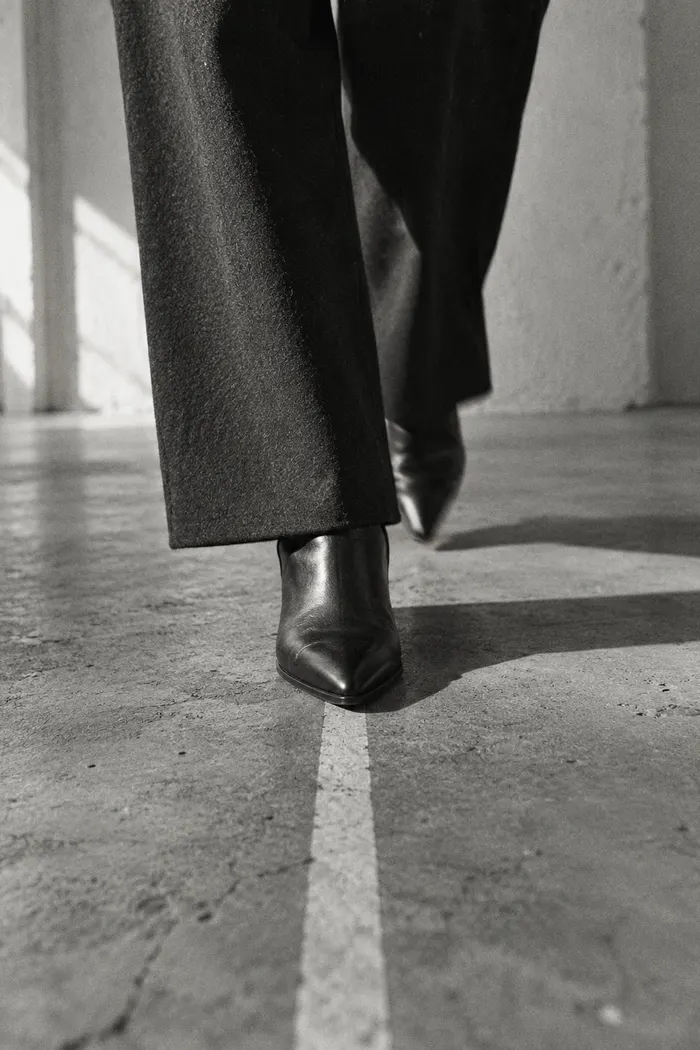
Put a strip of tape on a hard floor and walk along it, each foot landing just beside it. Ten lengths. This is where a heel walk starts to look polished.
- 05
Day 6: Stairs and turns
Walk up and down a few stairs with your whole foot on each step, holding the rail. Then practise turning on the balls of your feet at the end of your hallway.
- 06
Day 7: The full walk, on camera
Walk your hallway at a steady pace, eyes up, shoulders down. Film a front view and a side view and watch them back.
Why practising at home works
Walking in heels is a balance skill. Your ankles, calves and core need time to adjust to a new base, and that happens with short, regular practice, not one long session. At home you can practise without an audience, stop when you are tired and film yourself as often as you like.
Breaking in new heels
New heels are stiff and can rub. Wear them at home with thin socks for twenty minutes at a time over a few days. It softens the leather and shows you where they rub, so you can deal with it before you go out. If a heel still hurts after a week, it may not be the right shoe for your foot.
Practise on real floors
Carpet is forgiving; the world isn’t. Do most of your practice on a hard floor like tile, wood or laminate. You will hear your heel strike, which is useful feedback: a soft tap means a good heel-to-ball roll, a loud clack means you are landing too hard.
After the first week
Keep going with two or three short sessions a week. Move from block heels to higher or thinner ones when you feel steady (see heel types). Once you are confident indoors, take it outside with heels on stairs, cobblestones and grass. When you want the runway version, read how to walk like a model in heels.
Questions
How long should I practise each day?
Ten minutes is enough. Short, daily sessions build balance faster than one long session a week, and your feet will thank you.
Should I practise barefoot first?
Walking barefoot or in flats is great for learning the runway basics. For heels specifically, you need to practise in heels, because the balance is different.
Common mistakes
- Only practising on carpet, which hides the heel strike.
- Practising in new heels for the first time on the day of an event.
- Walking in heels for hours on day one. Short and often works better.
- Looking down at your feet during practice.
- Skipping balance work. It is what fixes wobbly ankles.
Défilé · Walk score
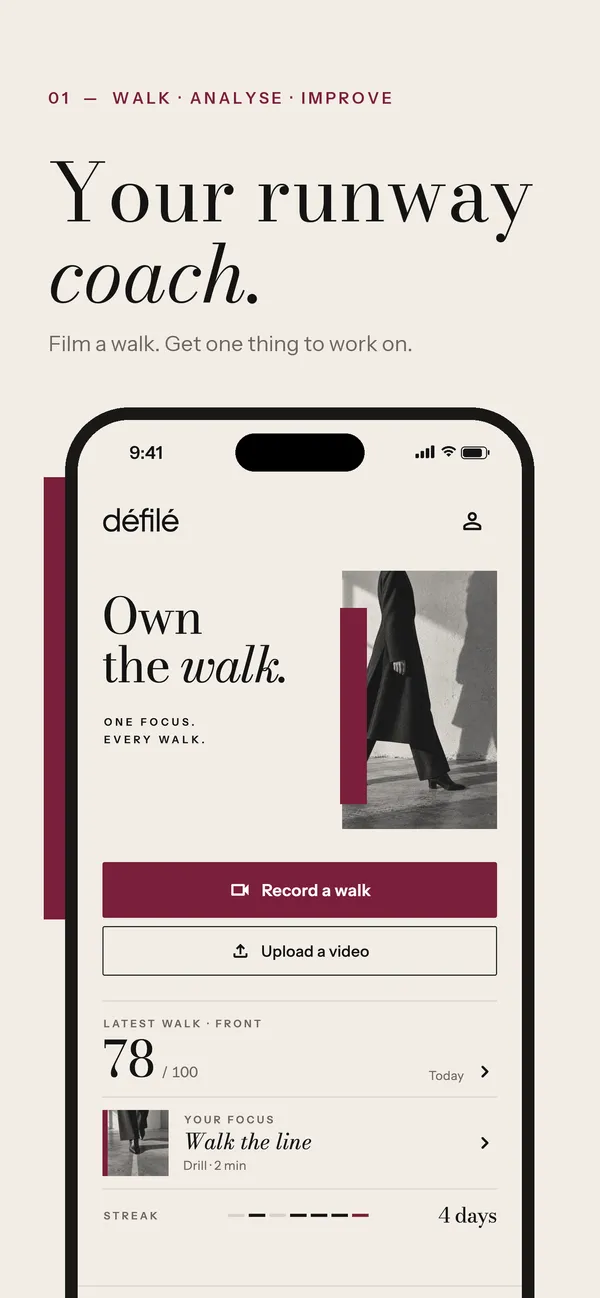
Film your day-7 walk in Défilé and see your walk score.
Film a walk and Défilé scores it out of 100, shows you the one thing holding it back and gives you a short drill to fix it. Your video never leaves your phone.
 On Android? Défilé is coming soon to Google Play.