04 / Posture guide
Ballet Posture Secrets: 5 Everyday Habits
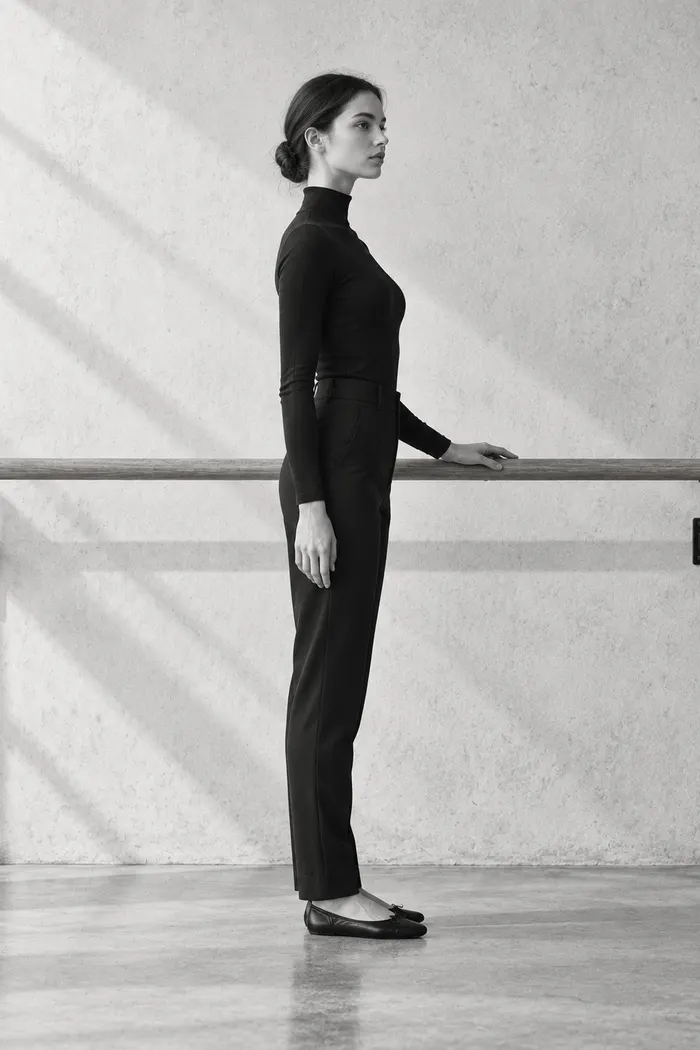
Dancers look tall because of five small habits, not because they hold themselves stiff. You can use the same ballet posture cues standing in a queue or walking into a room.
 Save this guide to Pinterest
5 cues dancers use
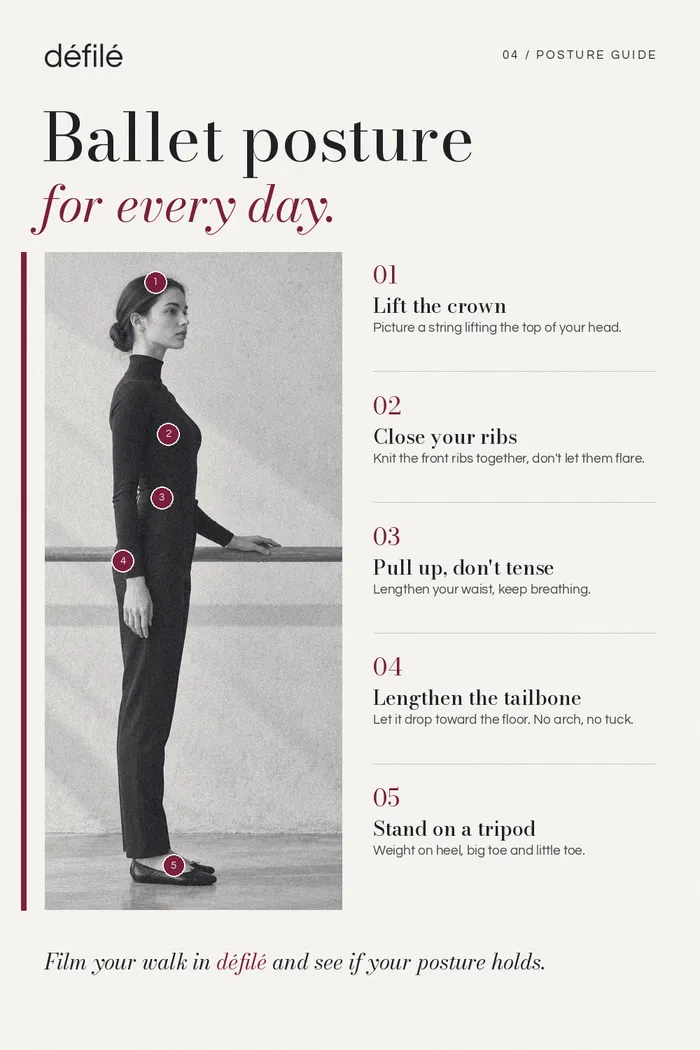
- 01
Lift the crown
Picture a string lifting the very top of your head, not your chin or forehead. Your neck lengthens, your head floats over your shoulders and your whole spine gets a little taller without any effort from the back.
TipTouch the top of your head with one finger and grow up into it.
- 02
Close your ribs
Knit the front of your ribs gently together, so they don’t flare forward. Flared ribs arch the lower back and push the chest out. Closed ribs keep your chest open but calm.
TipBreathe out fully. Notice how the front ribs drop in. Keep that as you breathe in again.
- 03
Pull up, don’t tense
Dancers talk about pulling up: a feeling of lengthening your waist and lifting out of your hips. It is length, not grip. You should be able to breathe, talk and smile while you do it.
TipIf you are holding your breath, you are tensing, not pulling up.
- 04
Lengthen the tailbone
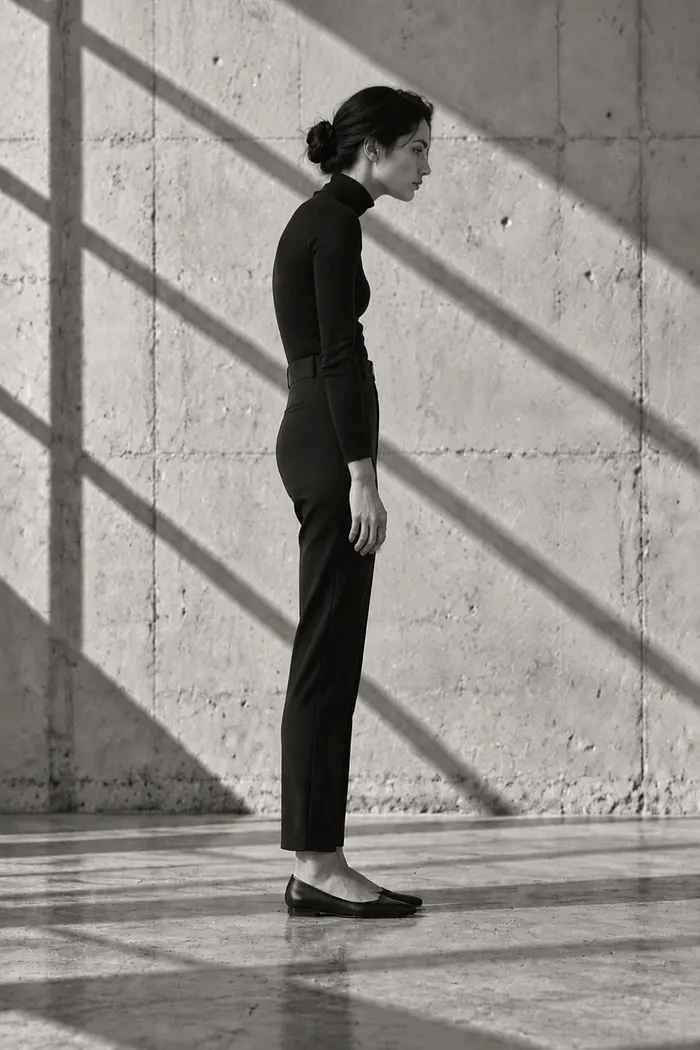
Let your tailbone drop towards the floor. No arching the lower back, no tucking the hips under. This puts your pelvis in neutral, which keeps the plumb line passing through your hip.
TipHands on your hip bones: they should point forward, not down or up.
- 05
Stand on a tripod
Spread your weight across three points of each foot: the heel, the base of the big toe and the base of the little toe. Standing on a tripod stops you rolling in or out and keeps your knees and hips stacked above your feet.
TipLift all ten toes, spread them, then place them down again. The tripod appears on its own.
Why ballet posture looks different
Ballet training builds posture from length, not from pulling the shoulders back. That is why dancers look tall without looking stiff. They lengthen up from the feet through the crown and let the shoulders settle on top. Everyday posture advice often starts at the shoulders and works down, which is backwards and makes most people arch their lower back.
You don’t need a barre, a leotard or turnout. These five cues work in any shoes, standing at a bus stop, sitting at a desk or walking into a room.
Try all five in one minute
- Stand on your tripod. Feel both feet.
- Let your tailbone drop.
- Close your ribs on a long breath out.
- Pull up through your waist.
- Lift the crown.
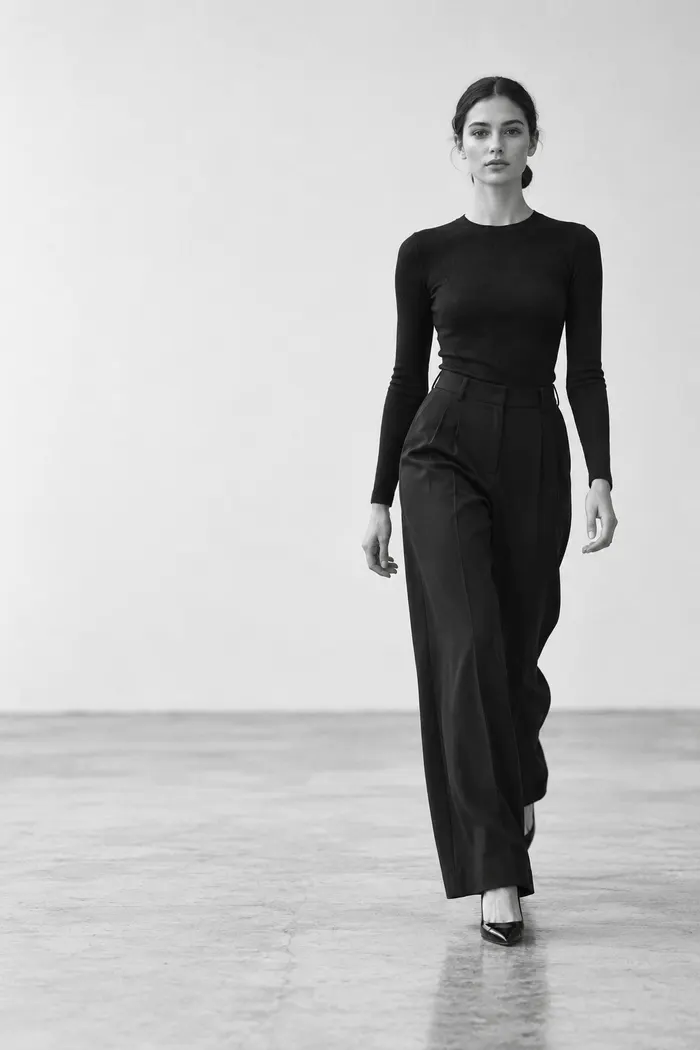
Now walk ten steps and try to keep the height you just found. It will slip. That is normal. Stop, rebuild it from the feet up and walk again. Doing this a few times a day is how it turns into a habit.
Making it stick
Attach the cues to things you already do. Tripod when you wait for the kettle. Crown when you walk through a doorway. Ribs every time you look at your phone. Within a couple of weeks you will notice yourself doing them without the reminder.
For exercises that build the strength behind these habits, try ballet posture exercises with no barre. To see how your posture holds when you move, read good posture while walking.
Questions
Do I need to have done ballet to have ballet posture?
No. These five cues work for anyone. Dancers have them because they practise them daily, and so can you.
Will ballet posture make me look stiff?
Not if you use the cues gently. Ballet posture is long and light. If you feel rigid or can’t breathe easily, you are squeezing instead of lengthening.
Common mistakes
- Squeezing your shoulder blades together, which is tension, not posture.
- Lifting the chin instead of the crown.
- Sticking the chest out, which flares the ribs.
- Tucking the tailbone under so hard the lower back flattens.
- Holding your breath to stay tall.
Not medical advice. If you have pain, numbness or an injury, see a physiotherapist before you start.
Défilé · Posture score
Film your walk in Défilé and see if your posture holds.
Film a walk and Défilé scores it out of 100, shows you the one thing holding it back and gives you a short drill to fix it. Your video never leaves your phone.
 On Android? Défilé is coming soon to Google Play.