05 / Confidence guide
Body Language That Reads as Confident
Confident body language is mostly about what you stop doing: fidgeting, rushing, shrinking. These body language tips cover what reads as confident and the habits that give nerves away.
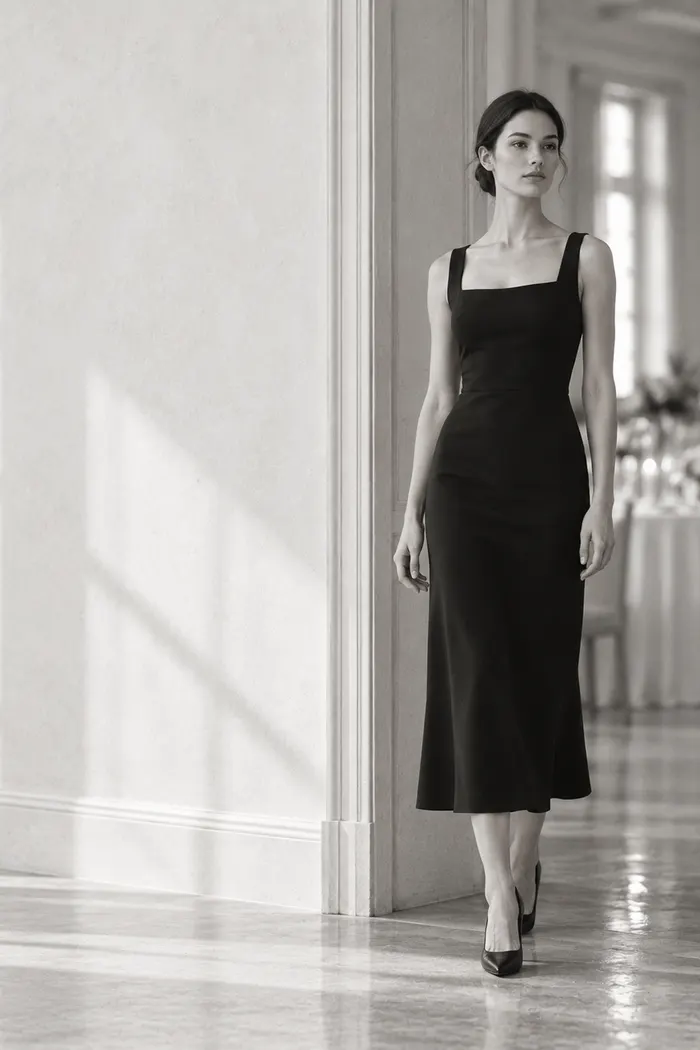 Save this guide to Pinterest
6 signals of confidence
- 01
An open stance
Stand with your weight even on both feet, about hip-width apart, arms by your sides. Crossed arms, crossed legs and a body turned away all read as closed, even when you are just cold or comfortable.
- 02
Still hands
Let your hands rest, at your sides, loosely clasped in front or on a table. Fidgeting with rings, hair, sleeves or a phone is the most common sign of nerves.
TipIf you need something to do with your hands, hold a glass or a notebook, and keep it still.
- 03
Steady eye contact
Look at people when they talk and when you talk, for a few seconds at a time. Not staring, just not avoiding. Looking at the floor or around the room reads as uneasy.
- 04
Slower movements
Nervous people move quickly: sharp head turns, fast walking, quick gestures. Slow everything down by about a quarter. Unhurried movement looks calm.
- 05
A relaxed face
Unclench your jaw, relax your forehead and let a smile come naturally when something is actually warm or funny. A forced smile held too long looks tense.
- 06
Upright, not rigid
Sit and stand tall, with your shoulders down and your chest open. Not military straight, just not shrinking. Slouching makes you look tired; stiffness makes you look nervous.
Your walk says it first
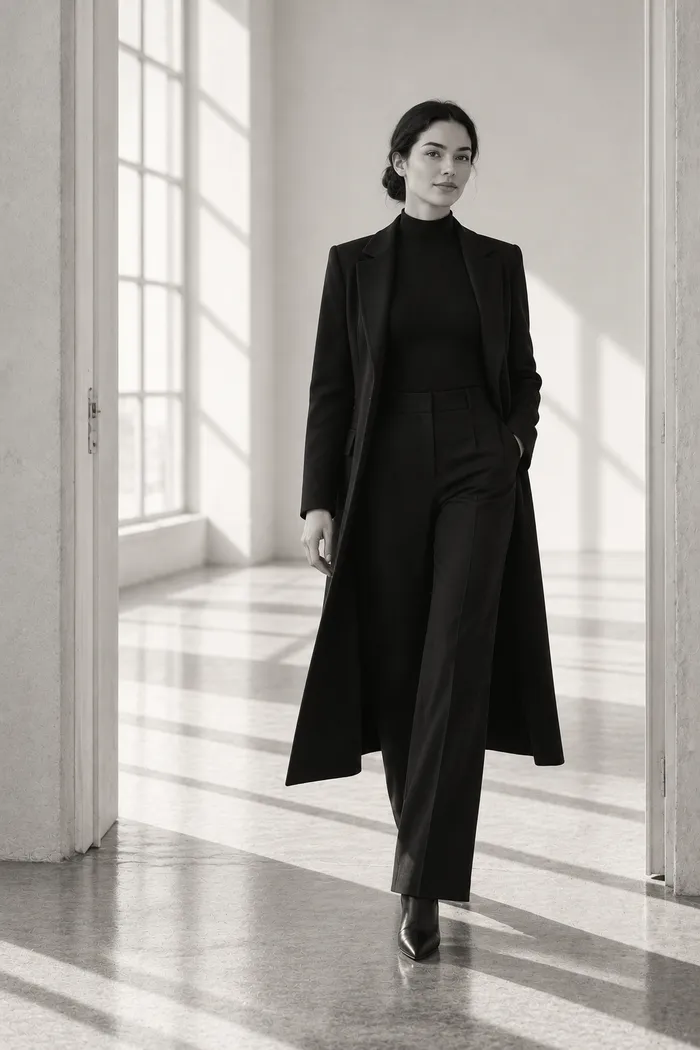
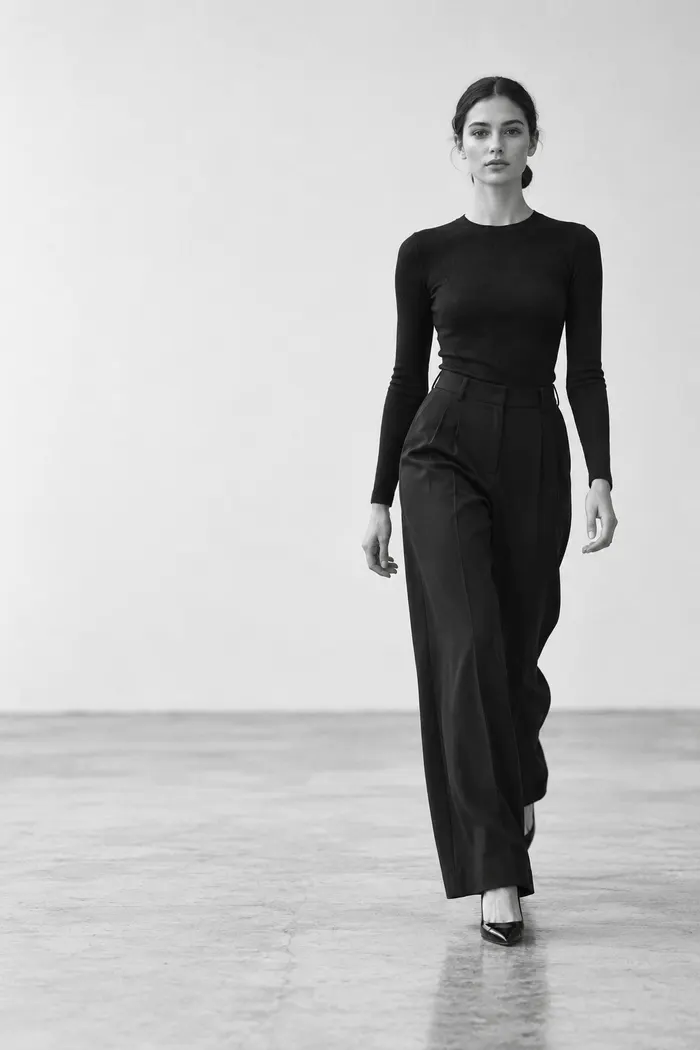
Before anyone sees your stance or your hands up close, they see you walk. A steady pace, level head and loose arms send the same signals as open body language, from across a room. That is why posture and walk are the base of every confident body language tip. See confident walk: how to walk into any room.
Drop one habit a week
You probably have one or two nervous habits you don’t notice. Film yourself talking to a friend on a video call, or ask someone you trust. Common ones: touching your hair, swaying, holding a cup with both hands, playing with a ring. Pick one and replace it with stillness for a week. Then the next one.
Practise in low-stakes moments
Body language changes fastest when you practise where it doesn’t matter: ordering coffee, walking into a shop, chatting with a neighbour. Try one signal at a time. Slow movement at the café. Steady eye contact with the cashier. An open stance in the queue. By the time a high-stakes moment comes, it is already a habit.
Put it together
Start before you walk in with the 5-second checklist, cross the room with a confident walk and stand with open, still body language once you arrive. For the posture behind all of it, read ballet posture secrets.
Questions
Are power poses real?
Standing in an open, tall posture can help you feel more settled, but you don’t need a dramatic pose. Upright and relaxed is enough.
How do I stop fidgeting?
Notice your one main fidget, then give your hands a still job: rest them, or hold one object lightly.
Common mistakes
- Holding your phone as a shield.
- Nodding constantly while others speak.
- Touching your face or neck when you feel exposed.
- Standing on one leg, shifting your weight back and forth.
- Overcorrecting into a power pose that looks staged.
Défilé · Posture score
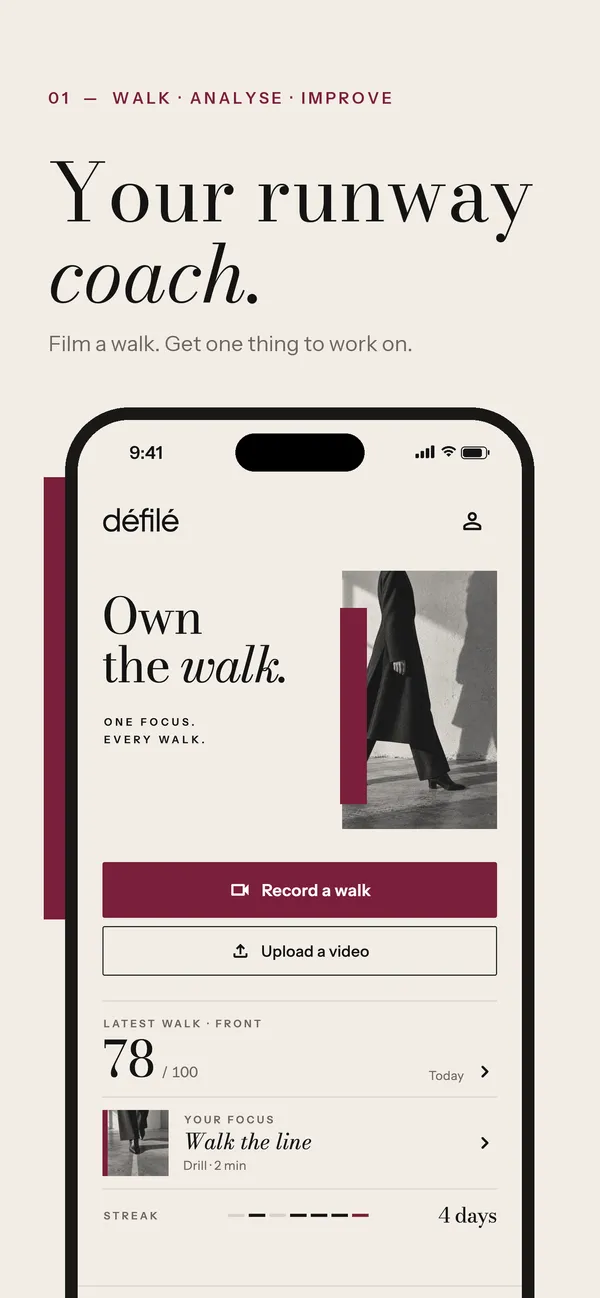
Your walk is body language too. Film a walk and see your posture score.
Film a walk and Défilé scores it out of 100, shows you the one thing holding it back and gives you a short drill to fix it. Your video never leaves your phone.
 On Android? Défilé is coming soon to Google Play.