04 / Posture guide
Forward Head Posture: How to Fix It
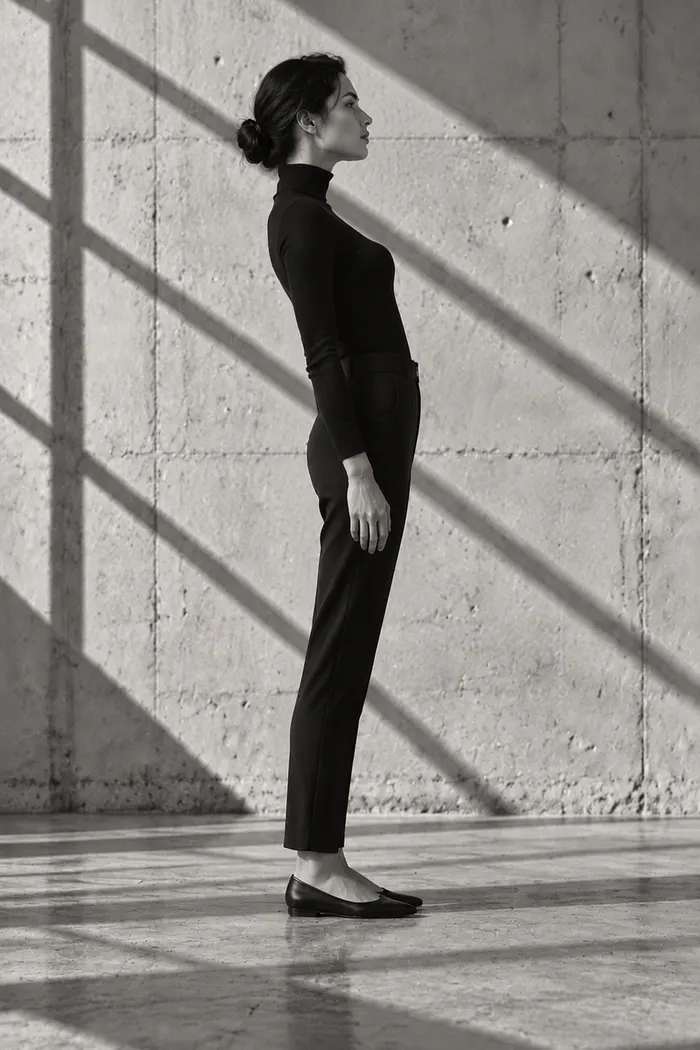
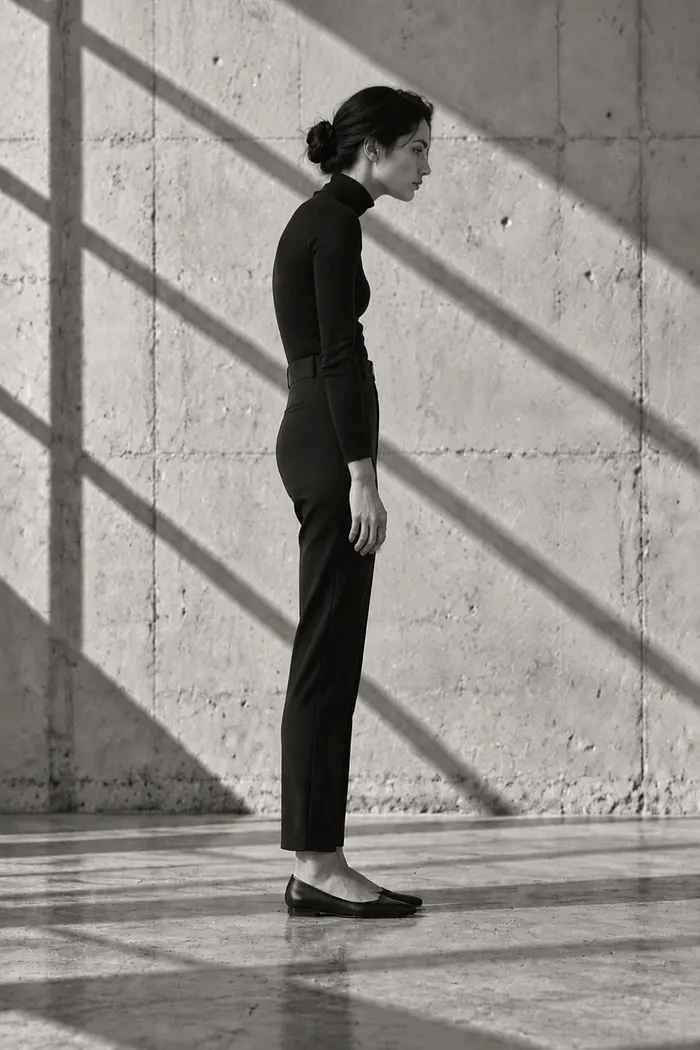
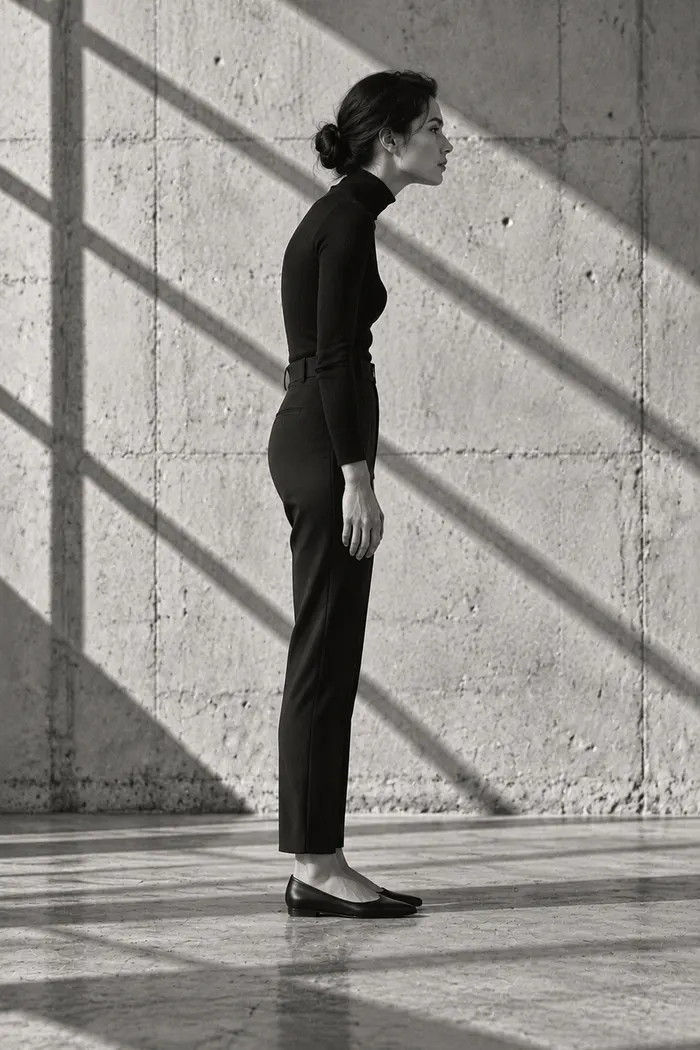
If you want to fix your posture, the head is often the place to start. Forward head posture pulls the shoulders and upper back forward with it. Bring the head back and the rest follows.
 Save this guide to Pinterest
5 fixes for forward head posture
- 01
Chin nods
Sit or stand tall. Glide your chin straight back, as if making a double chin, keeping your eyes level. Hold for three seconds, release. Ten reps, two or three times a day. This strengthens the deep neck muscles that hold your head in place.
TipIt should feel like a small movement at the top of the neck, not a tilt.
- 02
Chin nods on the floor
Lie on your back with your knees bent. Gently nod your chin and press the back of your head into the floor, lengthening the back of your neck. Hold for five seconds. Ten reps. Lying down makes it easier to feel.
- 03
Upper back extension
Sit on a chair and clasp your hands behind your head. Gently arch your upper back over the back of the chair, looking up slightly. Five slow reps. A stiff upper back pushes the head forward, so this helps from underneath.
- 04
Raise your screens
Put your laptop on a stand or books so the top third of the screen is at eye level. Hold your phone higher, closer to eye level, instead of dropping your head to it. Less time looking down means less time practising forward head.
- 05
Crown up when you walk
As you walk, think about the top of your head leading, not your face. Keep your eyes on a point at eye level ahead of you. Walking is where forward head posture shows most, and where you can practise fixing it all day.
Do you have forward head posture?
Try the wall test. Stand with your heels, bottom and shoulder blades against a wall. Without lifting your chin, can the back of your head touch the wall comfortably? If you have to tilt your head back to reach it, or can’t reach it at all, your head sits forward of your shoulders.
You can also check a side-view photo. If your ear is clearly in front of the middle of your shoulder, that is forward head posture.
Why it happens
Mostly screens. Looking down at a phone or across at a low laptop for hours trains the head to sit forward. It also happens when you walk looking at the floor. Over time, the muscles at the front of the neck get weaker and the ones at the back get tight.
Why it matters for your walk
Your head is heavy. When it sits forward, your upper back rounds to hold it, your shoulders roll in and your gaze drops. On video, it makes a walk look hesitant, even when you feel confident. It is also one of the first things people see when you walk towards them.
Make it stick
Do the chin nods daily for two weeks and change your screen habits. Then take a new side-view photo. For more on keeping your head right while walking, read where to look: head and gaze. For the shoulders that often come with it, see rounded shoulders and slouching.
Questions
Will a posture corrector brace fix forward head posture?
A brace can remind you, but it doesn’t build the muscles that hold your head in place. Exercises and habits do more in the long run.
How long until I see a change?
With daily chin nods and better screen habits, many people notice a difference in two to four weeks.
Common mistakes
- Tilting the head back instead of gliding it back.
- Pulling the chin in so hard the neck strains.
- Only fixing it when you remember, then going back to the phone.
- Pushing the chest forward to compensate.
Not medical advice. If you have pain, numbness or an injury, see a physiotherapist before you start.
Défilé · Alignment score
Film a side-view walk in Défilé and check your head alignment.
Film a walk and Défilé scores it out of 100, shows you the one thing holding it back and gives you a short drill to fix it. Your video never leaves your phone.
 On Android? Défilé is coming soon to Google Play.