04 / Posture guide
Swayback Posture: Signs and Exercises
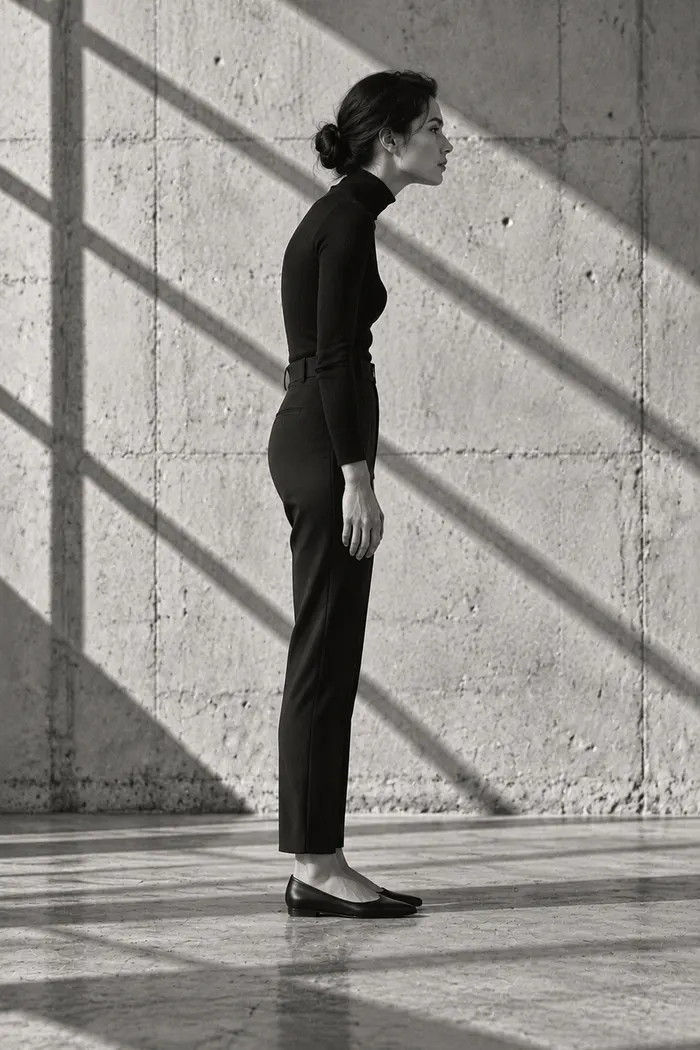
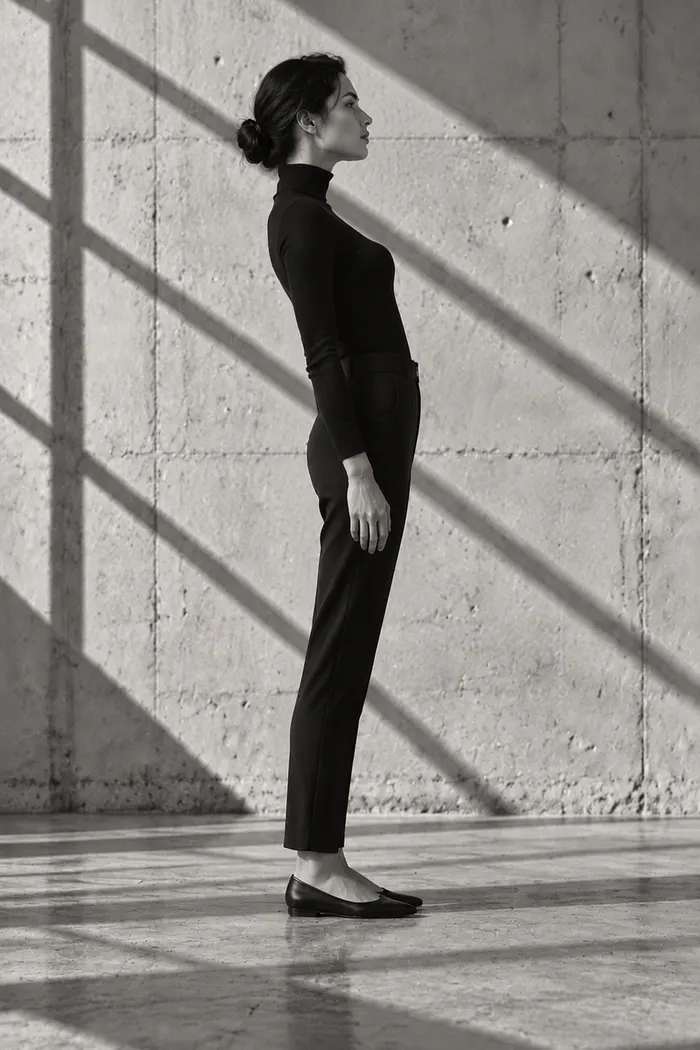
Swayback posture is easy to miss because it can look upright at first. The hips drift forward, the upper body leans back to balance and the knees lock. Here is how to spot it and what to do.
 Save this guide to Pinterest
5 exercises for swayback
- 01
Unlock your knees
Swayback almost always comes with locked knees. Stand and let your knees soften very slightly, so they are straight but not pushed back. Your hips will move back over your ankles on their own.
TipCheck in the mirror side-on: your knee should sit just in front of the plumb line, not behind it.
- 02
Glute bridges
Lie on your back, knees bent, feet flat. Press through your heels and lift your hips to a straight line from knees to shoulders. Pause, lower slowly. Two sets of twelve. Stronger glutes help hold the pelvis in place.
- 03
Dead bug
Lie on your back with arms pointing up and knees bent at 90 degrees above your hips. Slowly lower one arm and the opposite leg towards the floor while keeping your lower back gently touching the floor. Return and swap. Two sets of eight each side.
- 04
Hip flexor stretch
Kneel on one knee with the other foot in front. Gently shift your hips forward until you feel a stretch at the front of the hip of the kneeling leg. Hold for 30 seconds each side, twice.
TipKeep your torso upright and your tailbone dropping. Don’t arch the lower back.
- 05
Wall stand
Stand with your heels a few centimetres from a wall and your bottom and upper back touching it. Let your head come back towards the wall if it can. Hold for one minute. This shows your body where upright really is.
Signs of swayback posture
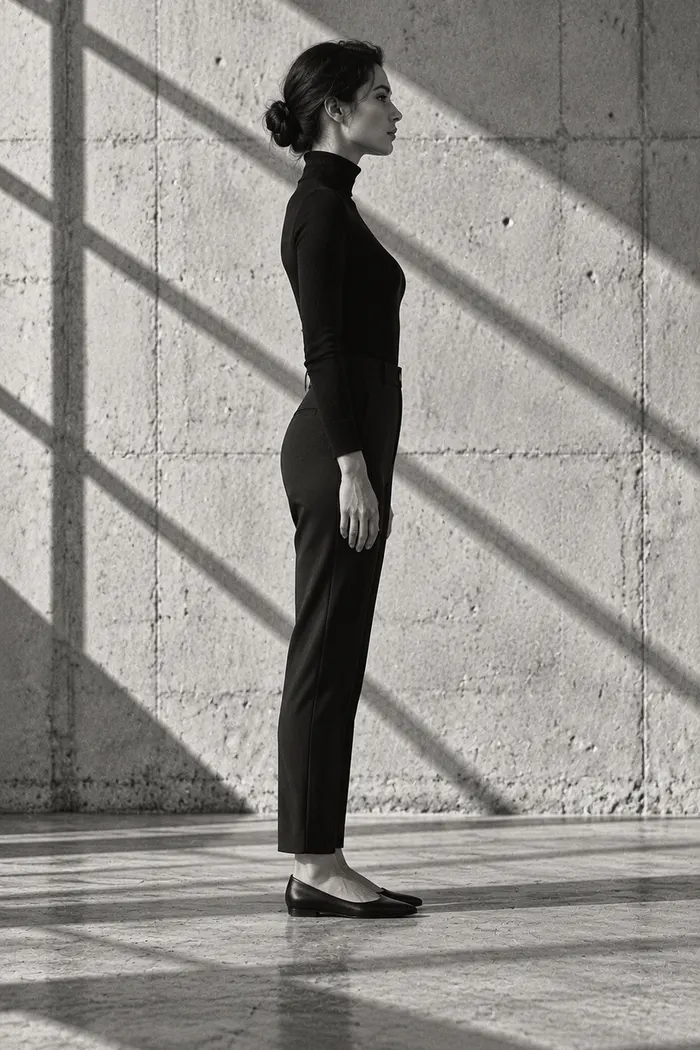
Swayback is easiest to see from the side. Look for:
- Hips in front of the ankles, as if you are pushing them forward.
- Upper body leaning back to balance, with the shoulders behind the hips.
- Knees locked, sometimes pushed slightly back.
- Head drifting forward to balance the lean back.
- A long, curved line from the chest to the hips instead of a straight stack.
People often stand like this when they are tired or waiting, because it lets them “hang” on their joints instead of using their muscles.
Why it happens
Swayback is often a habit rather than a structural problem. Standing for long periods, weak glutes and core, tight hip flexors from sitting and locked knees all make it easier to fall into. The exercises above work on each one.
Swayback when you walk
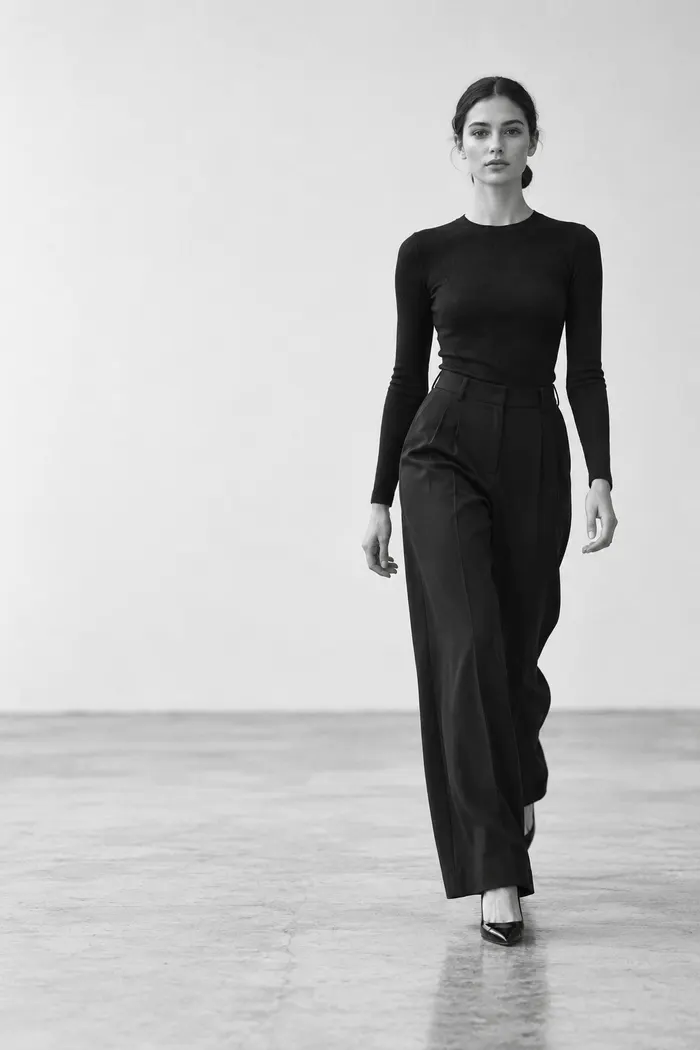
Swayback shows in your walk too. The hips lead, the upper body trails behind and your stride can get longer as your legs reach to catch up. Film yourself from the side: if your shoulders are behind your hips as you walk, that is swayback in motion. Read good posture while walking for how to fix it on the move.
Where to go next
Not sure it’s swayback? Compare yourself with the 4 types of posture. For a full daily routine, try posture exercises.
Questions
Is swayback the same as an arched back?
Not exactly. An arched back is mostly an exaggerated curve in the lower back. In swayback, the whole pelvis drifts forward and the upper body leans back to balance.
How long does it take to fix?
As a habit, a few weeks of daily practice usually shows a difference. Unlocking your knees and stacking your hips can change it within minutes, once you notice.
Common mistakes
- Mistaking it for good posture because the chest looks lifted.
- Tucking the hips hard under to fix it, which flattens the back.
- Standing for long periods with locked knees.
- Hanging on one hip while you wait.
Not medical advice. If you have pain, numbness or an injury, see a physiotherapist before you start.
Défilé · Alignment score
Film a side-view walk and see whether your hips stay stacked in your alignment score.
Film a walk and Défilé scores it out of 100, shows you the one thing holding it back and gives you a short drill to fix it. Your video never leaves your phone.
 On Android? Défilé is coming soon to Google Play.