03 / Walk guide
Stride Length: How Long Should Your Steps Be?
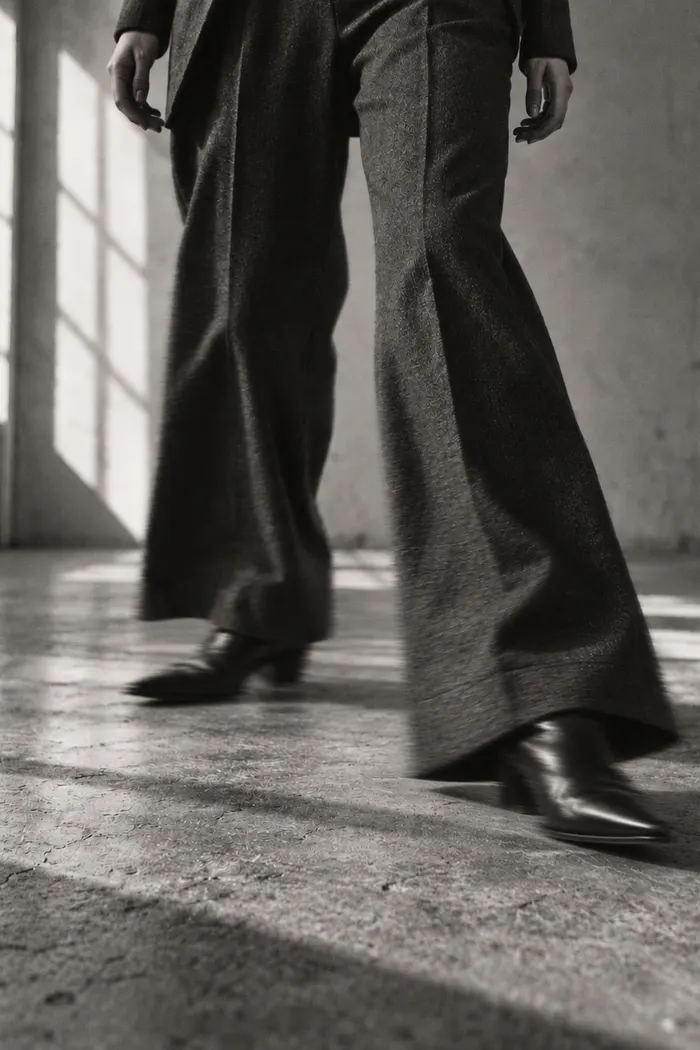
Most beginners think a runway walk needs long, dramatic steps. It doesn’t. The right stride is a little shorter than you expect, and it is what keeps your head still.
 Save this guide to Pinterest
Find your stride
- 01
Land under your hips, not in front of them
Your front heel should land only slightly ahead of your body, so your weight flows straight over it. When your foot lands far in front, it brakes each step and your head rises and drops with every stride.
Photo to comeNot thisOverstriding: front heel lands far ahead, knee locked, body tipping back. Photo to comeThisFront heel lands a short step ahead, knee soft, weight moving straight over it. Why it happens. We lengthen our steps when we try to look confident or fast. Reaching with the leg feels powerful, but it pushes the hips back and makes the body rise and fall like a seesaw.
Drill
- Walk ten steps at your normal stride and count them over a set distance.
- Walk the same distance in two more steps than before.
- Keep the beat the same, so the steps get shorter, not faster.
- Film it from the side. Your head should stay at one height.
- 02
Measure it with your own foot
A useful starting point is a gap of about one to one and a half of your own foot lengths between the heel of your back foot and the toe of your front foot. It is not a rule, just a place to start before you adjust by feel.
TipWalk on a tiled floor and count tiles. It makes your stride easy to check.
- 03
Let the hips set the length
Your stride should come from your hips swinging the leg forward, not from reaching with the foot. When the hips lead, the leg lands naturally in the right place. When the foot reaches, you overstride.
- 04
Keep the beat, change the length
Stride length and tempo work together. If you shorten your step, keep the same beat, and you slow down a little. That is fine: a runway walk looks unhurried. In heels, shorten your step again by about a quarter.
TipCount “one, two” out loud while you adjust. It stops you speeding up to compensate.
How to tell if you overstride
You don’t need a lab to check. Look for three signs on a side-view video:
- Your head bobs. It rises on each step and drops as you land.
- Your front knee is straight when your heel hits the floor.
- Your upper body leans back slightly as if you are walking into wind.
Any one of these means your stride is a bit long. Understriding looks different: very small steps, a fast beat and feet that barely lift. If that sounds like you, check the Shuffler in the walk types quiz.
Stride length and the runway line
Stride also affects your line. Long strides tend to swing the leg out to the side before it lands, which pushes your feet onto two tracks. A slightly shorter step lets the foot travel straight forward and land closer to one line. If your feet are landing wide, fix the stride first, then the line.
A three-day stride reset
- Day 1: Film a side-view walk at your normal pace. Note whether your head bobs.
- Day 2: Practise the drill above for five minutes. Use a count.
- Day 3: Film again from the same spot. Compare your head height across the clip.
Once your head stays level, go back to the 5 runway steps and walk them with your new stride. Then look at what your arms are doing.
Questions
Is a shorter stride slower?
Only slightly, if you keep the same beat. A runway walk is meant to look unhurried, so a small drop in speed is part of the look.
Does height change the right stride length?
Your stride scales with your leg length, which is why the foot-length guide works for everyone. Taller people naturally take longer steps; the principle of landing close under the hips is the same.
Common mistakes
- Taking giant steps to look confident. It makes you bounce.
- Shortening the step and speeding up the beat at the same time, which looks rushed.
- Locking the front knee as you land.
- Using your flats stride in heels.
- Looking at your feet to check your stride. Use the floor tiles or a video instead.
Défilé · Tempo score
See your stride and beat together. Film a walk and check your tempo score.
Film a walk and Défilé scores it out of 100, shows you the one thing holding it back and gives you a short drill to fix it. Your video never leaves your phone.
 On Android? Défilé is coming soon to Google Play.