03 / Walk guide
Model Walk Aesthetic: Editorial vs Commercial
Not every model walk looks the same. The two main styles, editorial and commercial, share the same basics but feel completely different. Knowing both lets you choose your aesthetic.
 Save this guide to Pinterest
Two runway aesthetics
- 01
The editorial walk
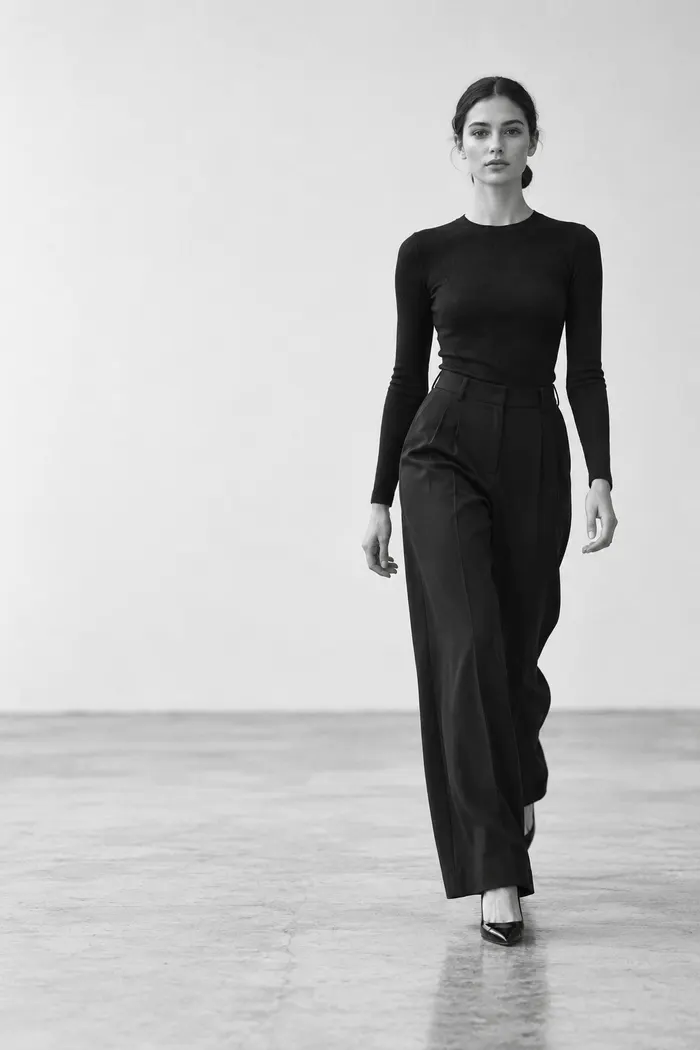
This is the high-fashion runway aesthetic. The pace is steady and often slightly slow, the arms swing very little, the face is neutral and intense, and the walk has a strong, grounded quality. It is designed to put all attention on the clothes.
TipThink still upper body, focused eyes, no smile.
- 02
The commercial walk
This is the walk for catalogues, high street brands and lifestyle shows. It is more relaxed and approachable: a natural arm swing, a softer face, sometimes a slight smile, and more personality in the movement.
TipThink “the best version of your everyday walk”.
- 03
What stays the same
Both aesthetics use the same basics: a steady beat, feet landing close to one line, a still head and a fixed gaze, shoulders down and a clean pause at the end. The difference is the level of intensity on top.
- 04
The ramp walk and other names
“Ramp walk” is used in parts of the world, especially South Asia, for the runway walk. The aesthetic depends on the show, not the name. Pageant walks are a third style, with more movement and a big smile.
Which runway aesthetic is right for you?
Neither is better. Editorial suits dramatic clothes, stark sets and moody photography. Commercial suits everyday clothes, bright sets and anything where the brand wants you to look approachable. Most people naturally lean one way, but it is worth being able to do both.
Editorial vs commercial at a glance
- Pace: editorial is steady and deliberate; commercial is natural and lighter.
- Arms: editorial swings very little; commercial has a relaxed, everyday swing.
- Face: editorial is neutral and intense; commercial is soft, sometimes smiling.
- Pause: editorial holds longer and stiller; commercial is shorter and friendlier.
- Feeling: editorial is focused; commercial is confident and easy.
Practise both
- Walk your normal runway walk three times.
- Turn the dial towards editorial: slower, less arm swing, neutral face, longer pause. Three walks.
- Turn it towards commercial: a touch faster, natural swing, soft face with a hint of a smile. Three walks.
- Film one of each and watch them side by side.
You will probably find one feels more like you. That is your natural aesthetic. Keep the other in your pocket for when you need it.
Finding your own style
Your aesthetic is more than the style you pick. It is how your walk looks when the basics are solid and you stop thinking about them. That takes practice. Start with the model walk tutorial, add some attitude and keep filming.
Questions
Which walk should I learn first?
Learn the basics, then the commercial walk. It is closest to your everyday walk. Editorial is easier once your walk is very steady.
Is a pageant walk the same as a runway walk?
No. Pageant walks usually include more movement, a smile and more interaction with the audience. The basics of posture and pace still apply.
Common mistakes
- Doing an editorial walk with a big smile, or a commercial walk with a hard stare.
- Thinking editorial means stomping. It is grounded, not heavy.
- Copying one model’s signature walk instead of learning the basics.
- Only practising one style, so you can’t adapt.
Défilé · Walk score
Try both styles and see which one scores higher for you.
Film a walk and Défilé scores it out of 100, shows you the one thing holding it back and gives you a short drill to fix it. Your video never leaves your phone.
 On Android? Défilé is coming soon to Google Play.