03 / Walk guide
Runway Strut: Add Attitude Without Overdoing It
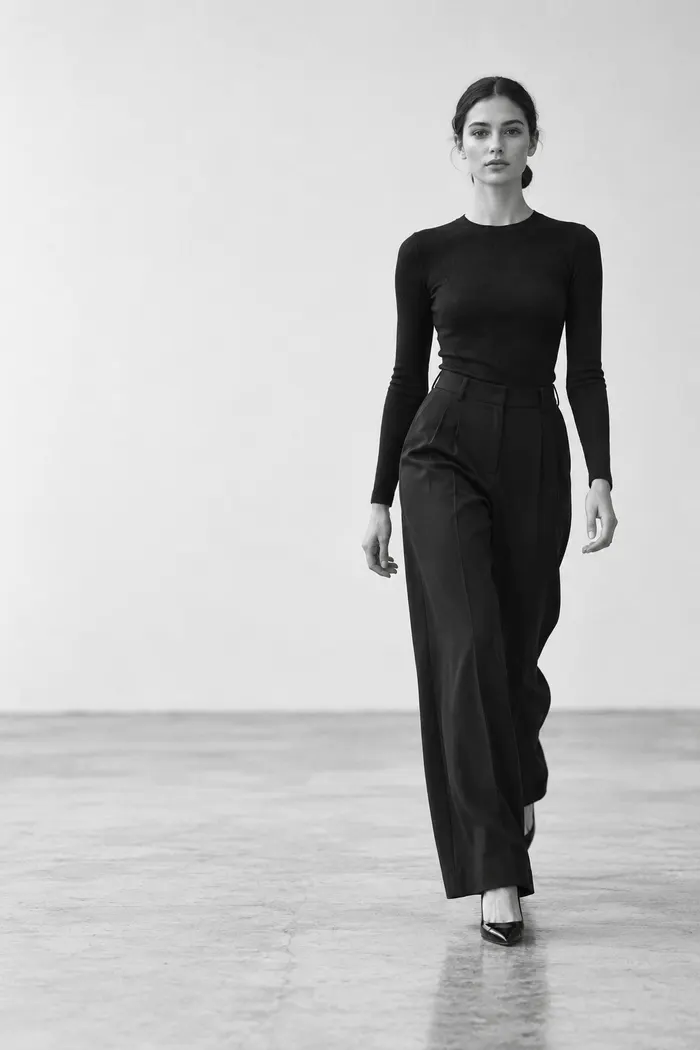
A strut is a model walk with more intent behind it. The attitude comes from small, controlled choices, not from swinging your hips or stomping. Here is how to add it without overdoing it.
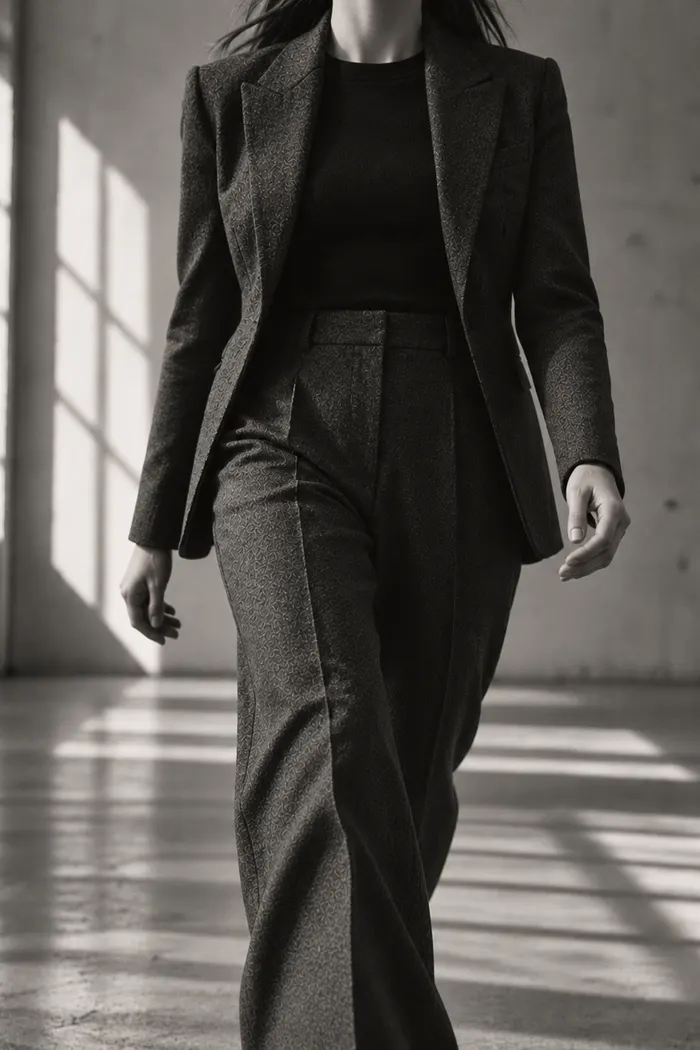 Save this guide to Pinterest
Build the strut
- 01
Start with a clean base
A strut built on a shaky walk just exaggerates the problems. Make sure your beat, line, gaze and posture are steady first. Attitude is the last layer, not the first.
- 02
Power from the hips
Let your leg swing forward from the hip with a little more drive than usual, and let your foot land with intent. The hips move because of where the feet land, not because you push them side to side.
TipThink “push the floor away” rather than “swing the hips”.
- 03
A grounded step
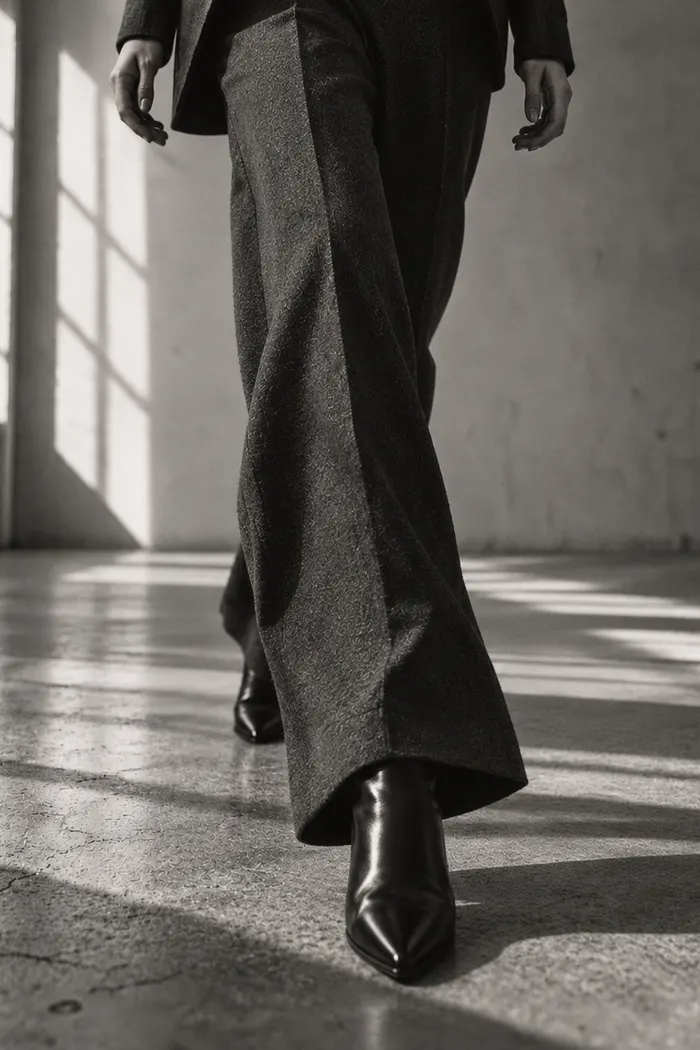
Land each step firmly through your heel and roll to the ball of your foot. You want to look connected to the floor. Light and floaty is a different style; stomping is too much.
- 04
Focused eyes
Attitude lives in the eyes. Keep your gaze fixed and calm on your point, with your face relaxed. A slight narrowing of the eyes can add intensity. Avoid frowning or pouting.
- 05
Own the pause
At the end of your walk, stop cleanly, hold still for two beats and let people look. A confident pause is the strongest part of a strut. Then turn and walk away at the same pace you arrived.
Attitude is control
The walks people remember are not the loudest. They are the most controlled: a model who holds the beat, keeps the line and pauses exactly long enough. Attitude is what happens when you are completely in control of a walk and in no hurry to get it over with.
That is why overdoing it is so common. When you try to look confident, it is tempting to add movement: more hips, bigger arms, a harder step. Every extra movement is something you have to control, and it usually shows as wobble.
Dialling it up and down
Think of attitude as a dial from 1 to 5:
- Everyday walk: relaxed, natural.
- Polished: steady beat, clean line, eyes forward.
- Runway: add a still upper body and a pause at the end.
- Strut: add a grounded step and more drive from the hips.
- Editorial: add intensity in the eyes and a longer, stiller pause.
Practise walking at each level, then pick the one that fits the moment. Most people look best around 3 or 4. For more on styles, read model walk aesthetic: editorial vs commercial.
Check it on camera
Film your strut from the front and the side. Watch for three things: your head staying level, your feet staying close to one line and your pause being actually still. If the strut costs you any of those, turn the dial down one notch. Then work back up to it over a few days. Go back to the 5 runway steps if the base needs work.
Questions
Is a strut the same as a runway walk?
A strut is a runway walk with more intensity: more drive from the hips, a grounded step and a stronger gaze. The basics underneath are the same.
How do I look fierce without frowning?
Keep your face relaxed and put the intensity in the eyes: steady, focused and unhurried.
Common mistakes
- Swinging the hips on purpose. It looks forced and throws off your line.
- Stomping, which reads as heavy rather than powerful.
- Adding a pout or a frown to look fierce.
- Speeding up. Attitude is unhurried.
- Big shoulder movements. The upper body stays calm.
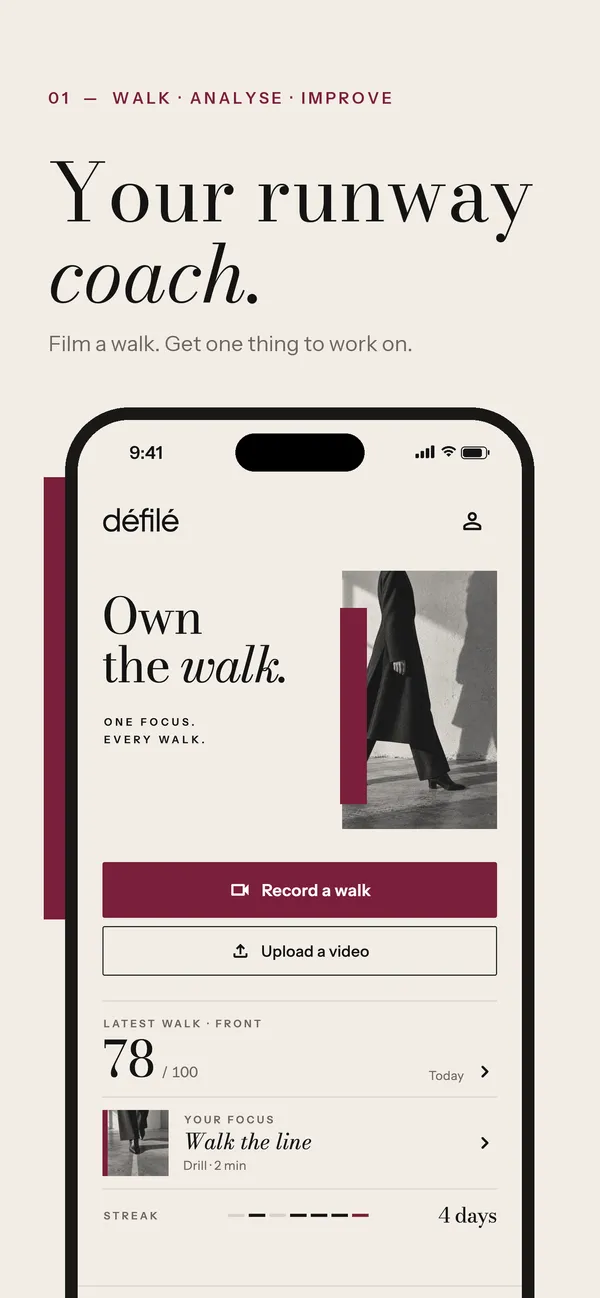
Défilé · Walk score
Is your strut still steady? Film it and check your walk score.
Film a walk and Défilé scores it out of 100, shows you the one thing holding it back and gives you a short drill to fix it. Your video never leaves your phone.
 On Android? Défilé is coming soon to Google Play.